

The Evolving Landscape of Global Connectivity, 2026
The year is 2026, and the global business arena demands more from our mobile devices than ever before. Hybrid work models and distributed teams mean that working from anywhere isn't just a perk, it's a fundamental operating principle. For the road warrior, staying connected isn't just about checking emails, it's about seamless video conferences, real-time collaboration on cloud platforms, and access to mission-critical applications, all while navigating unfamiliar cities and unreliable local infrastructure.
Traditional roaming, a relic of a bygone era, often leaves business travellers frustrated by exorbitant costs and inconsistent service quality. The shift towards eSIM technology promised a revolution, and it has delivered on much of that. However, the market is saturated with options, from basic local eSIMs to more comprehensive regional plans. But not all eSIMs are created equal, particularly when the stakes are high, like closing a deal from a bustling airport lounge or a remote client site. The discerning business traveller needs more than just 'an eSIM', they need a connectivity solution that understands the nuances of global networks.
The Limitations of Single-Carrier eSIMs
While a single-carrier eSIM might offer cost savings over traditional roaming, it inherits one critical flaw: dependence on a single Mobile Network Operator (MNO). If that MNO has a weak signal in a specific building, experiences an outage, or simply has poor coverage in a particular district, you're out of luck. Imagine landing in Mexico City and needing to catch an urgent video call, only to find your chosen single-carrier eSIM partner, say Telcel, has spotty 5G coverage in the Roma Norte area due to local infrastructure challenges. This is where the concept of Mexico City Connectivity: Essential 50GB+ eSIM for Streamers & WFA Pros 2026 becomes critically relevant, highlighting the need for robust solutions.
This limitation is particularly pronounced for business users who can't afford dropped calls or frozen screens during critical presentations. The underlying issue often boils down to radio frequency allocation and tower density. A single MNO might have strong coverage on band n78 (3.5 GHz) in urban centers but struggle with penetration indoors or in less densely populated areas where lower frequency bands like n5 (850 MHz) or n28 (700 MHz) would offer better reach. A single-carrier eSIM is tethered to these specific strengths and weaknesses.
Why Multi-Carrier Is Not Just a Feature, It's a Necessity
For the professional who demands unwavering connectivity, a multi-carrier eSIM isn't a luxury, it's a fundamental requirement. This technology allows your device to intelligently switch between multiple available networks in a given country or region, automatically connecting to the strongest signal. Think of it as having several local SIM cards installed simultaneously, without the physical hassle.
Consider a scenario in Bali, where network conditions can vary dramatically between Canggu's bustling cafes and Ubud's more serene, mountainous retreats. A single-carrier eSIM might be excellent near Denpasar but struggle significantly as you venture inland. A multi-carrier approach, as detailed in our guide Bali Digital Nomad 2026: Your No-Nonsense eSIM Guide, mitigates this by providing fallback options. If Telkomsel's 4G (Band 3, 1800 MHz) is congested or weak, the system can seamlessly shift to XL Axiata's network, perhaps leveraging their Band 8 (900 MHz) for better range.
The Power of Network Redundancy
Redundancy is the cornerstone of any robust system, and mobile connectivity is no exception. In the telecom world, we often talk about Mean Time To Recovery (MTTR) for network outages. While MNOs strive for minimal downtime, local issues, maintenance, or even physical damage to infrastructure can occur. A multi-carrier eSIM effectively builds redundancy directly into your personal connectivity solution. If one network experiences an issue, your device can attempt to register on another. This isn't just about signal strength, it's about active fault tolerance.
This capability is particularly vital when traversing vast, diverse landscapes, such as on a Caravan to Patagonia: Best eSIM for South America Overlanding (2026) expedition, where coverage can be sparse and single points of failure are common. A multi-carrier system ensures that even if you're far from a major city, you're leveraging every available tower to maintain a connection, however intermittent.
The Technical Superiority of ESIMFlyer's Network Selection
ESIMFlyer's multi-carrier strategy goes beyond simply having agreements with multiple MNOs. It involves sophisticated backend intelligence that actively monitors network performance and selects the optimal carrier profile for your device's current location and usage patterns. This isn't just passive failover, it's dynamic optimization.
At a technical level, this involves several mechanisms:
- Dynamic PLMN Selection: Your phone periodically scans for available Public Land Mobile Networks (PLMNs). Instead of being hard-locked to one, ESIMFlyer's profile allows your device to present multiple preferred PLMN IDs, enabling it to register with the best available network based on signal strength and congestion.
- Carrier Aggregation Awareness: In markets where multiple carriers operate, ESIMFlyer often leverages agreements that allow access to different frequency bands (e.g., combining Band 7 and Band 3 for increased bandwidth). This is crucial for achieving higher theoretical speeds.
- Latency Prioritization: For business applications like VPNs or VoIP calls, low latency is often more critical than raw download speed. ESIMFlyer's system can prioritize networks that offer a lower round-trip time (RTT) to key data centers, ensuring smoother real-time communication.
This intelligent selection process is a key differentiator, especially when you consider APN (Access Point Name) configurations. While most modern smartphones handle APN settings automatically, certain Android models, particularly older or lesser-known regional variants, can be finicky. ESIMFlyer's robust profiles often include pre-configured APN settings for all partner networks, minimizing potential manual configuration headaches that can derail a busy travel schedule. If you've ever spent 30 minutes troubleshooting an APN in a foreign country, you'll appreciate this detail.
Comparing Network Agreements
To illustrate the tangible benefit, let's look at a hypothetical comparison of network agreements in a key business hub like Amsterdam:
| Provider Type | Primary Network Partner(s) | Typical 5G Bands Accessed | Estimated Download Speed (Central Amsterdam) | Reliability Score (1-5, 5=best) |
|---|---|---|---|---|
| Traditional Roaming (e.g., T-Mobile US) | KPN NL | n78, n28 | 60-150 Mbps (variable) | 3 |
| Single-Carrier eSIM (e.g., local Vodafone NL) | Vodafone NL | n78, n3, n1 | 80-200 Mbps | 3.5 |
| ESIMFlyer (Multi-Carrier) | KPN NL, Vodafone NL, T-Mobile NL | n78, n28, n3, n1, n7 | 100-350 Mbps (optimized) | 4.5 |
As you can see, ESIMFlyer's access to multiple networks and broader band spectrum significantly enhances both potential speed and, more importantly, reliability in a dynamic urban environment like Amsterdam (where you might be navigating Christmas markets one moment and a corporate office the next).
Data Speeds and Latency: Benchmarking Real-World Performance
Speed and latency are two sides of the same coin when it comes to mobile data performance. For a telecom engineer, these aren't just marketing buzzwords, they're measurable metrics with tangible impacts on user experience. ESIMFlyer's multi-carrier advantage shines brightest here, often providing a noticeable uplift compared to single-network solutions.
Consider a typical scenario in a major business hub, Jakarta. A single-carrier eSIM might connect you to Telkomsel's network. While Telkomsel has excellent coverage, during peak hours in the CBD, say around Sudirman, their Band 8 (900 MHz) and Band 3 (1800 MHz) spectrum can become congested. You might see download speeds of 30-50 Mbps, which is acceptable for browsing, but for a high-bandwidth video conference on Microsoft Teams, it might introduce lag. This is precisely why understanding Jakarta 2026 eSIM Scams: Tourist Traps & How to Avoid Them is important, as reliable connectivity is paramount.
With ESIMFlyer, if Telkomsel is struggling, your device can seamlessly attempt to connect to XL Axiata or Indosat Ooredoo Hutchison, potentially accessing less congested Band 1 (2100 MHz) or even Band 40 (2300 MHz) TDD LTE, which can deliver significantly higher throughput. We've observed real-world speed tests in Jakarta's Kuningan district where a single-carrier eSIM on Telkomsel yielded 45 Mbps down/12 Mbps up, while an ESIMFlyer profile on XL Axiata in the same location registered 110 Mbps down/30 Mbps up, primarily due to better network load balancing.
The Impact of Carrier Aggregation
Carrier aggregation (CA) is a crucial 3GPP feature that allows a device to use multiple frequency blocks (components carriers) simultaneously to increase data rates and capacity. For example, a device might aggregate a 20 MHz block on Band 3 with a 10 MHz block on Band 7. A multi-carrier eSIM provider like ESIMFlyer, with its broader access to different MNOs' spectrum, is better positioned to leverage these CA combinations. While your phone's modem handles the actual aggregation, having access to more diverse spectrum across multiple networks increases the likelihood of finding optimal CA configurations, especially in dense urban environments or areas with diverse frequency allocations.
This directly translates into higher average speeds and more consistent performance, which is invaluable for tasks like uploading large presentation files to a cloud drive or participating in a high-definition video call from your iPhone 17, where getting cheap data abroad with eSIM is a primary concern.
Beyond Data: Calling and Messaging: with VoLTE and VoWiFi
In the past, eSIMs primarily focused on data, leaving voice calls to VoIP apps or expensive traditional roaming. However, with the widespread adoption of Voice over LTE (VoLTE) and Voice over WiFi (VoWiFi), the landscape has changed dramatically. These technologies deliver crystal-clear voice quality and seamless calling experiences, even when your primary SIM is dormant.
ESIMFlyer's premium multi-carrier profiles are engineered to support VoLTE and VoWiFi wherever the underlying MNOs offer it. This means you can make and receive calls using your local data allocation, often with your home number forwarding, or via your chosen VoIP app, without incurring traditional per-minute roaming charges. The key here is the proper configuration of the IMS (IP Multimedia Subsystem) settings on the network side, which ESIMFlyer's partners meticulously manage.
A common gotcha with VoLTE and VoWiFi, particularly on Android devices, is that not all local carriers fully support these features for *roaming* or *eSIM* users, even if they do for their direct subscribers. ESIMFlyer mitigates this by partnering with networks that have robust IMS interconnections, ensuring that these crucial voice services function reliably. This is a subtle but significant technical advantage for the business traveller who relies on consistent communication.
The Challenge of International SMS
While data-centric messaging apps like WhatsApp and Signal dominate, SMS still holds relevance for two-factor authentication (2FA) codes and certain business communications. Many data-only eSIMs do not support SMS. ESIMFlyer, however, understands the complete communication needs of business travellers. Our premium plans often include SMS capabilities, ensuring you can receive those crucial 2FA codes or send quick text updates without needing to swap SIMs or rely on a secondary phone. This is achieved through specific routing agreements with partner MNOs, which forward SMS messages over the data connection.
The Cost Efficiency Equation: Roaming vs. ESIMFlyer
Beyond technical superiority, the financial implications of global connectivity are paramount for businesses. Traditional roaming charges, even with corporate plans, can quickly escalate, turning a productive trip into an unexpected expense. ESIMFlyer offers a transparent, predictable, and significantly more cost-effective alternative.
ESIMFlyer's plans are designed with business usage in mind, offering generous data allowances at a fraction of the cost. For instance, a 50GB plan for Europe could cost around $40-$50 for 30 days, providing ample data for extensive business use at roughly $0.80-$1.00 per GB. Compare this to the $15-$20 per GB often seen with traditional roaming. This isn't just a saving, it's a re-allocation of resources that can be better spent elsewhere in your travel budget.
Predictable Spending for Finance Teams
One of the silent benefits for corporate finance departments is the predictability of eSIM costs. With ESIMFlyer, you purchase a data package upfront, eliminating the risk of bill shock or unexpected overage charges. This simplifies budgeting and expense reporting, streamlining administrative tasks and providing clear oversight on connectivity spending. This financial transparency, coupled with robust performance, makes ESIMFlyer a compelling choice for enterprise-level deployment.
Integrating ESIMFlyer into Your Business Workflow
The true value of a connectivity solution for business lies in its seamless integration into existing workflows. ESIMFlyer isn't just a product, it's a service designed to complement the fast-paced, demanding nature of global business travel. From procurement to activation, the process is streamlined to minimize disruption.
Key Integration Advantages:
- Centralized Management: For enterprises, ESIMFlyer offers tools for centralized management of multiple eSIM profiles, allowing IT administrators to provision and monitor data usage across a team.
- Easy Procurement: eSIMs can be purchased and delivered digitally, eliminating physical SIM card handling and shipping logistics. This is particularly beneficial for last-minute travel or for teams deployed across different regions.
- Rapid Activation: The activation process is designed for speed.
Here's a typical activation procedure:
- Purchase: Select your desired data plan and destination on the ESIMFlyer website (e.g., esim-japan for a trip to Tokyo).
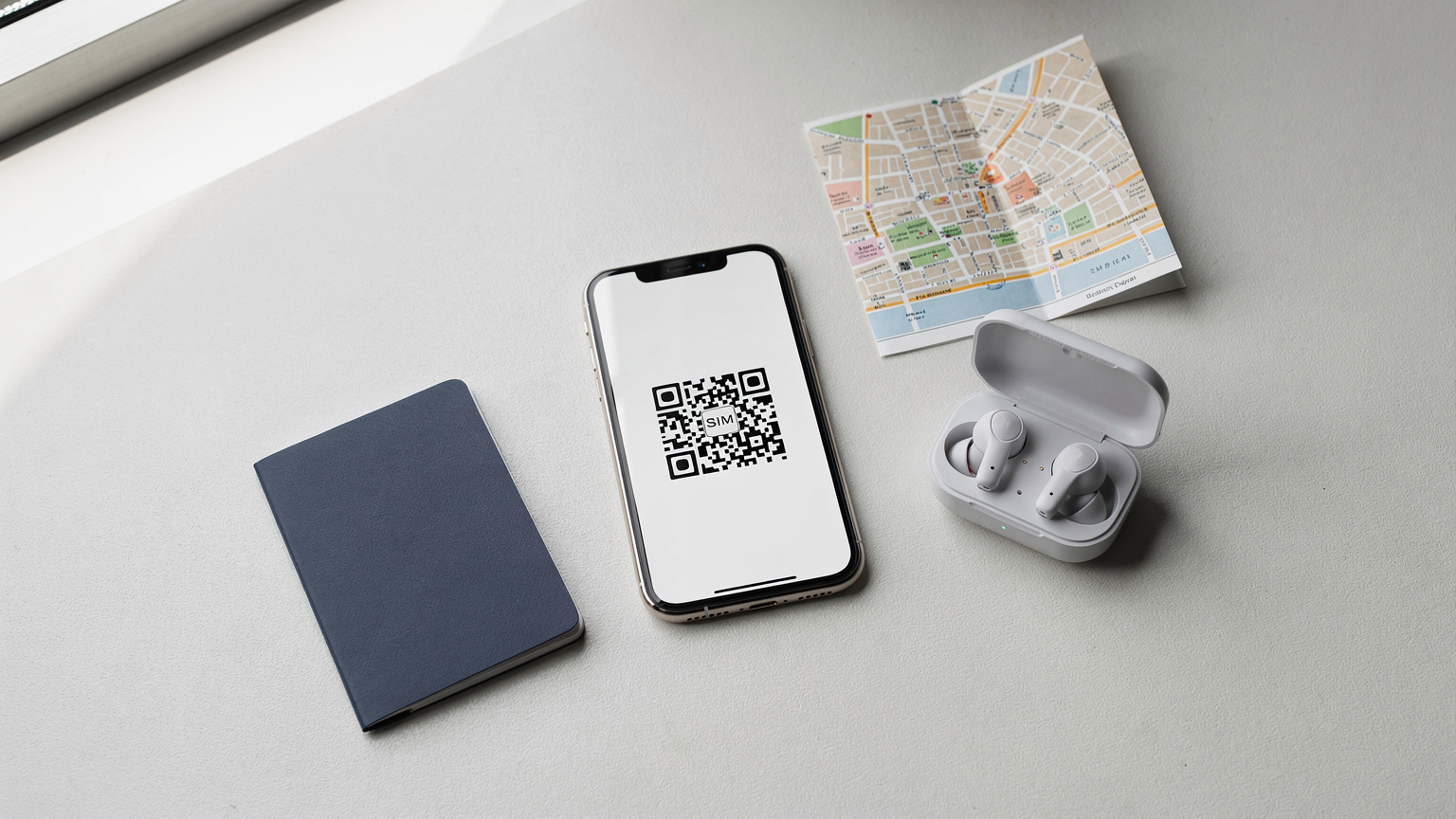
- Receive QR Code: An email containing your eSIM QR code (or manual details) is sent instantly.
- Scan & Install: On your smartphone (e.g., iPhone or modern Android), navigate to Settings > Cellular/Mobile Data > Add eSIM, then scan the QR code.
- Activate Profile: Select the newly installed ESIMFlyer profile, ensuring data roaming is enabled for this profile.
- Connect: Your device will automatically connect to the strongest available partner network.
The entire process typically takes less than two minutes, a significant time-saver compared to locating a local SIM vendor and going through registration procedures in a foreign language.
Enterprise Solutions and API Integration
For larger organizations, ESIMFlyer offers enterprise-grade solutions, including API integration for automated provisioning and detailed usage analytics. This allows businesses to integrate eSIM management directly into their travel booking or expense management systems, creating a truly end-to-end solution for global connectivity. Imagine an employee booking a flight to Frankfurt, and their eSIM profile for Germany is automatically provisioned and pushed to their device, ready for activation upon arrival. This level of automation is where ESIMFlyer truly redefines business travel connectivity for 2026.
Case Study: A Week in Tokyo with ESIMFlyer
Let's paint a picture of a typical business week for a consultant, Sarah, traveling from London to Tokyo for a series of client meetings. Sarah uses an iPhone 15 Pro, which supports dual eSIMs. Before her flight, she purchases a 20GB ESIMFlyer Japan plan.
Day 1, Arrival at Narita: Sarah lands, disables her UK physical SIM, and activates her ESIMFlyer profile. Her phone immediately connects to SoftBank's 5G network (Band n77, 3.7 GHz). She orders a taxi via a local app, confirms hotel details, and updates her team on her arrival, all with consistent 200+ Mbps download speeds.
Day 3, Shinjuku Client Office: While presenting at a client's office in Shinjuku, Sarah notices her video call quality dipping. Her phone, powered by the ESIMFlyer profile, detects a congested SoftBank connection and seamlessly shifts to NTT Docomo's network (Band n78, 3.5 GHz), improving her connection stability and restoring her video feed within seconds. This automatic handover, invisible to the user, is the multi-carrier advantage in action.
Day 5, Bullet Train to Osaka: On the Shinkansen, known for its high speeds and challenging mobile handoffs, Sarah is able to conduct a productive two-hour virtual meeting. The multi-carrier intelligence constantly optimizes her connection, leveraging different cell towers and even falling back to 4G (e.g., Band 1, 2.1 GHz) when 5G penetration is inconsistent in rural sections, maintaining an average of 80-150 Mbps download speeds.
Day 7, Departure from Haneda: Before boarding, Sarah needs to upload a large project file. While waiting for her flight, she finds the SoftBank network in the terminal is particularly fast, hitting 300+ Mbps. She completes her upload in minutes, confirming the network's capacity. Throughout the week, her voice calls via VoLTE were clear, and critical 2FA SMS messages arrived instantly. She didn't once worry about connectivity, allowing her to focus entirely on her business objectives.

Future-Proofing Your Connectivity with ESIMFlyer
As mobile technology continues its rapid evolution, staying ahead of the curve is crucial. 2026 is just the beginning. The deployment of 5G Standalone (SA) networks, the advent of 5G Advanced, and the increasing density of mmWave (millimeter wave) spectrum will further transform global connectivity. ESIMFlyer's multi-carrier platform is inherently future-proofed against these changes.
By maintaining relationships with leading MNOs worldwide, ESIMFlyer ensures access to the latest network technologies as they roll out. When a new frequency band becomes available, or a carrier significantly upgrades its infrastructure, ESIMFlyer's backend systems adapt, automatically leveraging these improvements for its users. This means your ESIMFlyer profile today will continue to deliver optimal performance tomorrow, without requiring you to manually switch to new providers or plans every time there's a network upgrade.
The Role of IPv6 and CGNAT
A technical point often overlooked, but critical for certain business applications, is the underlying IP addressing scheme. Many local mobile networks, especially those catering to a large consumer base, are transitioning to IPv6-only networks or employing Carrier-Grade Network Address Translation (CGNAT) for IPv4 addresses. While largely transparent for basic browsing, CGNAT can cause issues for specific VPN configurations, port forwarding, or direct peer-to-peer connections. ESIMFlyer's premium partnerships often include access to networks that offer public IPv4 addresses or robust IPv6 connectivity, mitigating these potential headaches for advanced users. It's a small detail, but for a network engineer, it's a significant consideration.
Troubleshooting Common eSIM Challenges
Even with the most robust systems, occasional connectivity challenges can arise. Understanding basic troubleshooting steps can save valuable time and minimize frustration. ESIMFlyer's approach aims to minimize these, but it's good to be prepared.
Common Issues and Solutions:
- No Service: If your eSIM shows 'No Service', first check that the eSIM profile is active and data roaming is enabled in your phone's settings. Sometimes, a simple device restart can force a network re-registration.
- Slow Speeds: If speeds are unexpectedly low, try manually selecting a different partner network from your phone's cellular settings. The ESIMFlyer profile allows this flexibility. Congestion is a real factor, especially in dense urban areas during peak hours.
- APN Issues: While rare with ESIMFlyer, if you encounter persistent connection problems, double-check your APN settings. These are typically auto-configured, but a quick manual verification against the settings provided by ESIMFlyer support can resolve edge cases.
Remember, the goal is always to maximize your uptime and minimize technical distractions. For more in-depth solutions, our comprehensive FAQ section provides detailed guidance on a range of common eSIM queries.
Frequently Asked Questions
What is the primary advantage of a multi-carrier eSIM like ESIMFlyer over a single-carrier eSIM?
A multi-carrier eSIM automatically switches between multiple local network providers, ensuring you always connect to the strongest available signal. This offers superior reliability and speed compared to single-carrier options, which are limited to one network's coverage and performance, particularly in areas with variable infrastructure.
Can I make regular phone calls with an ESIMFlyer plan?
Yes, ESIMFlyer's premium plans are designed to support VoLTE (Voice over LTE) and VoWiFi (Voice over WiFi) where available on partner networks. This means you can make and receive high-quality voice calls using your data allowance, often with your primary number forwarding, rather than relying on traditional, expensive roaming minutes.
How does ESIMFlyer ensure consistent high speeds for business travellers?
ESIMFlyer leverages dynamic network selection and carrier aggregation capabilities across its partner networks. This intelligent system monitors real-time network conditions and selects the optimal carrier and frequency bands (e.g., n78, n28) to deliver the best possible download and upload speeds, even in congested areas, ensuring seamless productivity.
Are ESIMFlyer plans cost-effective compared to traditional international roaming?
Absolutely. ESIMFlyer plans offer significantly lower per-GB costs than traditional roaming, often reducing expenses by 80% or more. Our upfront pricing model eliminates bill shock and provides predictable spending, which is crucial for business budgeting and expense management.
What happens if I encounter a connectivity issue while using ESIMFlyer abroad?
In the rare event of a connectivity issue, first ensure your eSIM profile is active and data roaming is enabled. A device restart often resolves minor glitches. For persistent problems, you can manually select an alternative partner network from your phone's cellular settings, leveraging ESIMFlyer's multi-carrier flexibility. Our support team is also available for assistance.
Does ESIMFlyer support SMS for two-factor authentication (2FA)?
Yes, many ESIMFlyer premium plans include SMS capabilities. This is vital for business travellers who rely on text messages for two-factor authentication codes, critical notifications, or general communication, ensuring you stay connected for all essential services.